Cabin Air Filter Replacement
18 Apr 2020- Vehicle: 2012 Mazda 3i, 2.0L, vin G
- Tools Used: Phillips screwdriver
- Parts Purchased: STP CAF1878P
Procedure
-
Procrastinate until you smell a foul odor coming from the vents. Or be proactive.
-
On the passenger side, pop off the small panel next to the floor mat with your mouth. Alternatively, use your hands.
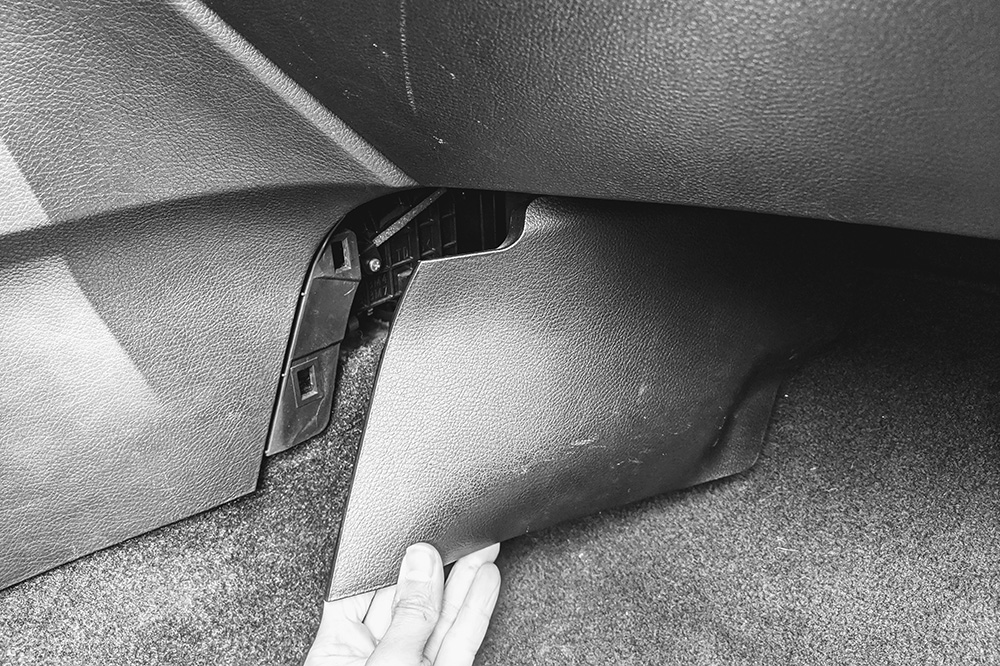
-
Pop off the panel underneath the glove box via the big-ass tabs seen on the left and right.
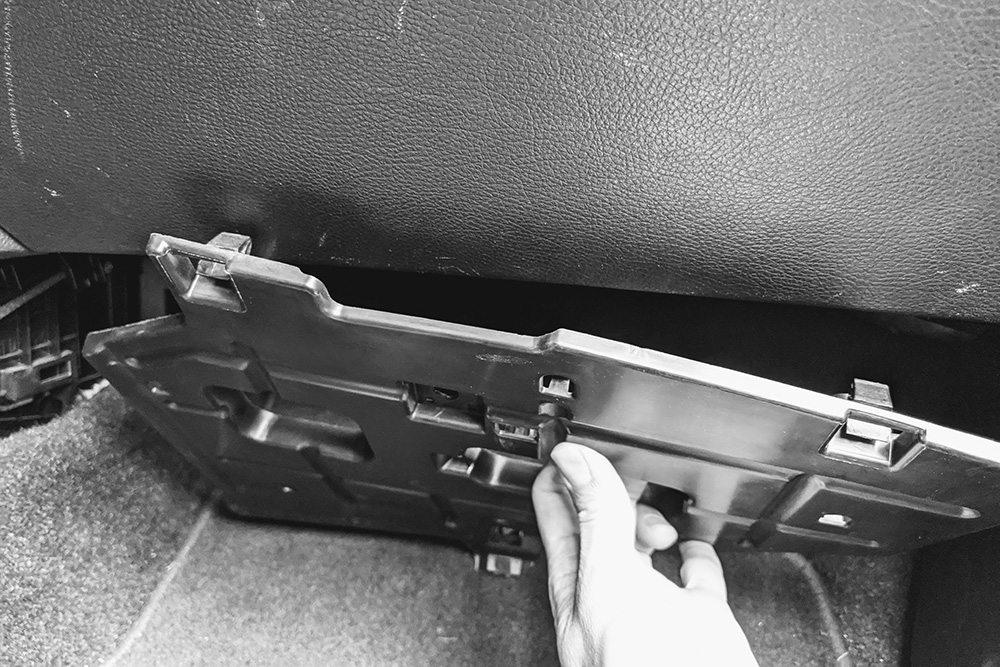
-
The blower motor resistor housing is now fully exposed. The resistor, cabin air filter, and a legion of dismembered bugs lurk within. Grab a Phillips and unscrew the two screws shown below. Pull the housing back to gain access to the cabin air filter. If you’re tall with a big head, prepare for a yoga session.
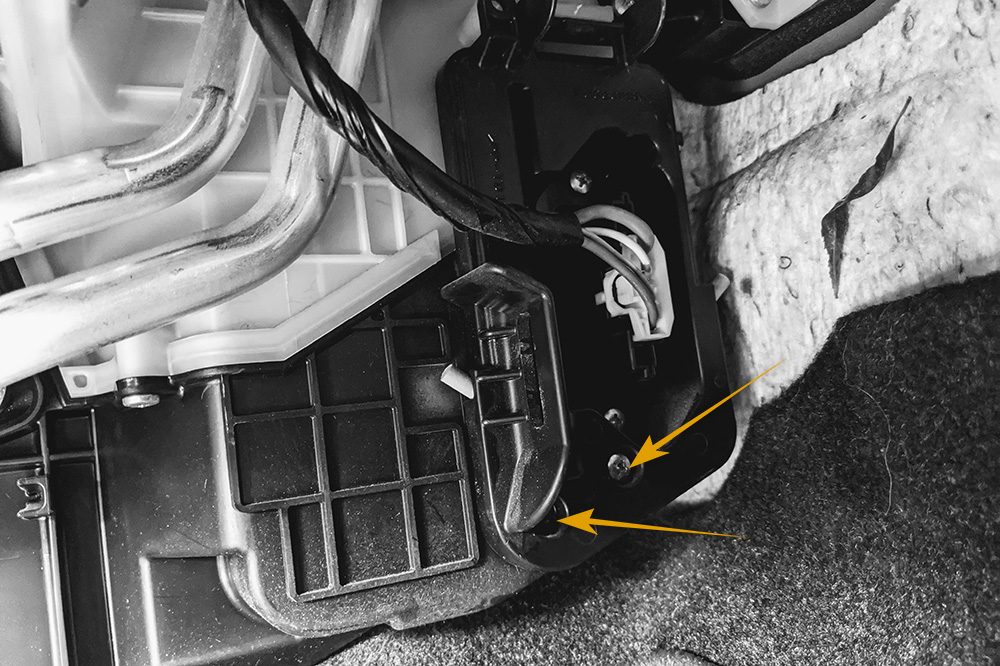
-
Disconnect the power cable going to the blower motor resistor. Not disconnecting the cable will require 3 arms or a high level of patience to install the new filter.
-
Once the blower motor resistor housing is removed, you have direct access to the cabin air filter itself. The filter comes in two stacked halves. Observe how they’re stacked when removing them. When inserting the new filter, the half with the foam goes in first. The foam should be on top, and the thicker tab should face out. Once in, push that first half upward so you can slide the second half through the same opening. Again, the thicker tab should face out. Make sure it all fits like a glove. Now, enjoy a photo of my filthy filter.

-
Put everything back from whence it came - especially the blower motor resistor (the card-looking thing). The air flowing past the cabin air filter cools the resistor.
P.S. If you’re wondering what the blower motor resistor is for, it helps control the different fan speeds. As you turn the fan dial to higher speeds, the resistor provides less and less resistance, thus allowing more current to flow through the blower motor. When the fan is at its max setting, the blower motor resistor is bypassed completely. So… if your fan only works at the highest settings, chances are you have a bad resistor.